Gen Z Slang · internet culture
What Does 'the discourse' Mean?
Mainstream
See it in action
Video: What is the meaning of the word DISCOURSE?, embedded from its original platform.
What it means
At its core, 'the discourse' is just the discussion happening around a topic, but online, the word has picked up a heavy layer of irony. When someone says 'the discourse,' they almost never mean a calm, productive exchange of ideas. They mean the whole churning cycle of takes, counter-takes, callouts, and quote-posts that erupts whenever something divisive hits the timeline.
Saying 'the discourse' treats the entire argument as a single object you can point at, laugh at, or refuse to touch. It's a way of stepping outside the fight and commenting on it rather than joining it.
The tone is usually exhausted or mocking. 'I can't believe we're doing this discourse again' signals that the speaker thinks the argument is recycled, pointless, or beneath them, even when they're clearly still watching it. That detachment is the point: framing something as 'the discourse' lets you participate in a conversation while pretending you're above it. It also works as a label for quality.
A bad, circular, bad-faith argument gets dismissed as 'discourse,' while a genuinely good point might be described as 'actually contributing to the discourse.' The Tumblr origin of the meme baked this in from the start, the phrase was used to caption screenshots of particularly bad arguments as if they were art pieces, which tells you everything about the attitude it carries.
There's also an older, literal sense that still floats around and occasionally collides with the meme. In academic writing, 'discourse' straightforwardly means discussion about theory, society, and how things are conceptualized. People with that background have noted how strange it is to see the internet version, and some have accidentally upset people by using the word in its plain, natural definition without realizing it had become a joke.
Today, though, the dominant usage among Gen Z online is the ironic one: 'the discourse' is the argument itself, viewed from a slight, smirking distance. [1][2]
The receipt
Original post, embedded from Twitter, linked and credited. Visuals on this page are shown for commentary and identification.
The receipts
Documented, dated uses of “the discourse” — each quote is verbatim from the linked source.
“What do you contribute to the discourse?”
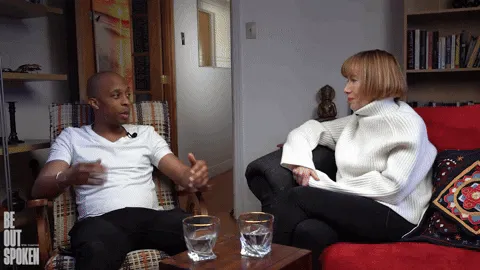
“en technology shapes more and more of our lives, who gets to decide its limits? The Discourse conducted an open discussion on “Who Should Control Artificial Intelligence? Governments, Companies or Society?”, exploring qu…”
“le, @iamsteveharris, and @benosh2o, as they talk on the identity of the man, at The Discourse. #TheIdentityOfTheMan #TheDiscourse #RealTalk #JoshuaVille - #regrann”
Every quote above passed the same verification gate this site publishes under: real source, real date, copied verbatim. See the editorial policy.
Why it's everywhere
The term has stuck around because the thing it describes never goes away. Every week produces a new controversy, a celebrity statement, a show finale, a dating-take, and every one of them generates the same predictable cycle of posts. Having a single word for that whole cycle is useful, so 'the discourse' keeps getting pulled out whenever the timeline locks onto something.
It functions as both a summary and a complaint: naming the discourse is a way of saying 'here we go again' without having to re-litigate anything.
Its current life is mostly as a meta-commentary tool. People use it to announce they're opting out ('not touching that discourse'), to mock how repetitive online arguments are ('this discourse happens every three months like clockwork'), or to joke about inserting themselves into it.
Because it comes from an older Tumblr meme tradition, it also carries a slight knowingness, using it fluently signals you've been around internet argument culture long enough to be tired of it. That mix of utility and weariness is exactly why it remains mainstream rather than fading: as long as people argue online, there will be a discourse to gesture at.
How to use it
Casual and ironic; safe in any informal context. Not cringe yet, but using it sincerely to mean 'serious discussion' will read as out of touch.
- “I opened the app for two minutes and immediately got hit with the discourse. Logging back off.”posting after seeing a trending argument
- “We are NOT doing the pineapple-on-pizza discourse again, I refuse.”group chat when an old debate resurfaces
- “Her thread actually contributed something to the discourse instead of just yelling.”praising a genuinely good take
- “Every three months the timeline rediscovers this exact discourse like it's brand new.”commenting on a recycled argument
- “He thinks he's above the discourse but he's read every single reply.”teasing a friend who claims to be unbothered

Frequently asked
What does 'the discourse' mean online?
It refers to the whole online argument happening around a topic, all the takes, replies, and fights treated as one thing. It's usually said ironically or with exhaustion.
Is saying 'the discourse' an insult?
Usually it's dismissive rather than directly insulting. Calling something 'the discourse' implies the argument is repetitive, bad-faith, or not worth engaging with.
Where did 'the discourse' come from?
It became a meme on Tumblr, where it was used to caption particularly bad arguments as if they were art. A meme archive dates that usage to April 2015, with earlier joking uses of 'discourse' on the site going back to late 2012.
Does 'discourse' still have a normal meaning?
Yes, in academic contexts it just means discussion or debate about ideas. Some people using it that way have confused or annoyed internet users who only know the ironic meme sense.
How do you use 'the discourse' in a sentence?
Something like 'I'm staying out of the discourse today' or 'this discourse again?', it works as a label for whatever argument is currently consuming the timeline.