Gen Z Slang · relationships, slang
What Does 'pookie' Mean?
Mainstream
Via GIPHY (@bsdliteratureclub)
See it in action
Video: What Does Pookie Mean?, embedded from its original platform.
What it means
In contemporary colloquial English, especially among teenagers and young adults in the United States and the United Kingdom, “pookie” functions primarily as an affectionate, pet-name-style nickname. It is used to address a person with whom the speaker shares a high degree of intimacy, typically a romantic partner, a best friend, or a sibling, while simultaneously conveying a playful, slightly whimsical tone.
The word’s phonetic shape, soft consonants, a repeated vowel, and a diminutive “-ie” ending, mirrors other endearing terms such as “sweetie,” “cutie,” or “honey-bun,” and therefore feels both familiar and novel when inserted into everyday speech. Speakers may pair “pookie” with additional modifiers (e.g., “pookie bear,” “my pookie,” “pookie-pie”) to heighten the cuteness factor or to create a personalized nickname that distinguishes the relationship from more generic terms.
In digital communication, the term appears frequently in text messages, Instagram captions, TikTok comment threads, and Snapchat streaks, where brevity and emotional immediacy are prized. The nickname can be employed both as a direct address ("Hey pookie, you coming tonight?") and as a noun phrase describing the beloved person ("She’s my pookie").
Although the tone is light-hearted, the underlying implication is one of deep fondness; the speaker expects the recipient to recognize the term as a sign of trust and emotional closeness rather than as a sarcastic jab. A secondary, much less common sense of “pookie” exists within certain drug-using subcultures.
In this context, the word denotes a specific type of glass pipe, usually a small, hand-held device used for free-basing cocaine, methamphetamine, or similar stimulants. The pipe is typically fashioned from a short length of glass tubing with a bulbous end that can be heated to vaporize the drug.
This meaning is highly niche, confined to conversations about paraphernalia, online forums dedicated to substance use, or in-person exchanges among individuals who partake in free-basing. Because the drug-related sense is both illegal and socially stigmatized, it rarely crosses into mainstream media, and most speakers unfamiliar with that subculture will interpret “pookie” solely as the affectionate nickname. [1][2]
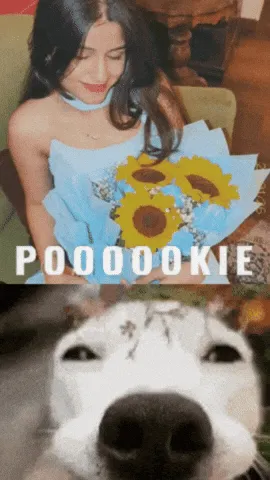
The receipt
Original post, embedded from Twitter, linked and credited. Visuals on this page are shown for commentary and identification.
Where it came from
First seen: debated
The affectionate nickname sense of “pookie” appears to have emerged organically in the early 2000s within African-American Vernacular English (AAVE) and later spread through internet meme culture. Early documented instances surface on MySpace and early YouTube comment sections, where users would tag friends with whimsical monikers that sounded cute and non-standard.
Linguists note that the suffix “-ie” is a classic diminutive marker in English, and the root “pook” may be an onomatopoeic echo of the sound a small animal makes, reinforcing the term’s pet-like quality. By the mid-2010s, the nickname had been adopted by a broader demographic, aided by viral TikTok videos in which creators would introduce their partners as “my pookie” while performing dances or lip-syncs.
The term’s diffusion aligns with the broader trend of personalized pet names that replace more generic terms like “babe” or “sweetheart.” Conversely, the drug-paraphernalia meaning of “pookie” is recorded in the Wiktionary entry, which defines it as “a glass pipe designed for freebasing cocaine, methamphetamine, or other drugs.” The origin of this usage is less well-documented, but drug-culture slang often repurposes innocuous-sounding words to mask illicit activity.
The term likely entered the lexicon in the 1990s within underground rave and meth-cooking circles on the West Coast, where users would refer to their glass pipes as “pookies” to avoid detection by law enforcement or by outsiders unfamiliar with the slang. The two senses appear to have developed independently, sharing only phonetic coincidence rather than a common etymological root. [1][2]

Why it's everywhere
The affectionate “pookie” has surged in popularity during the TikTok era (2020-2024) because the platform rewards short, catchy audio-visual memes that often hinge on quirky language. Influencers routinely caption videos with phrases like “my pookie and I” or overlay text that reads “pookie vibes only,” creating a feedback loop where viewers adopt the term to signal that they are in on the joke.
Moreover, the nickname fits neatly into the broader Gen-Z linguistic pattern of softening relational language, adding suffixes such as “-ie,” “-y,” or “-kins” to convey warmth without sounding overly formal. The term’s phonology (the repeated “oo” vowel) also makes it meme-friendly; it is easy to pair with visual filters, animated stickers, or pet videos, all of which amplify its spread across Instagram Reels, Snapchat lenses, and Discord chatrooms.
In contrast, the drug-related meaning has not contributed to the term’s mainstream visibility. Its usage remains confined to closed online forums (e.g., certain subreddits, encrypted chat groups) and face-to-face exchanges among individuals who use free-base substances.
Because the term is tied to illegal activity, it is rarely discussed in mainstream media, and any mention is typically framed in a cautionary or law-enforcement context, which further limits its viral potential. Consequently, the current cultural momentum of “pookie” is driven almost entirely by its sweet-nickname sense, reinforced by a generation that prizes personalized, playful language as a marker of identity and relational closeness.

How to use it
Informal and affectionate; safe for casual chats, but avoid in professional settings.
- “Hey pookie, you down for a movie night this Friday?”Text message between two close friends planning a weekend outing
- “Just posted a pic of my pookie bear and me at the beach 🌊❤️”Instagram caption accompanying a photo of a couple on vacation
- “Yo, can you hand me that pookie? I need a hit.”Brief spoken exchange in a private setting among individuals using a free-base pipe
- “Thanks for always being my rock, pookie. Love you tons!”Snapchat message sent to a long-term partner after a supportive conversation
Frequently asked
Is ‘pookie’ only for romantic partners?
No, it can be used for best friends, siblings, or anyone you feel affection toward.
Does using ‘pookie’ sound childish?
It’s intentionally playful; most Gen Z users see it as cute, not immature.
Should I avoid ‘pookie’ in professional settings?
Yes, it’s informal and best kept to personal conversations.