Meme · reaction
The 'Sound vs. Light Speed Test' Meme, Explained
Peaking now
See it in action
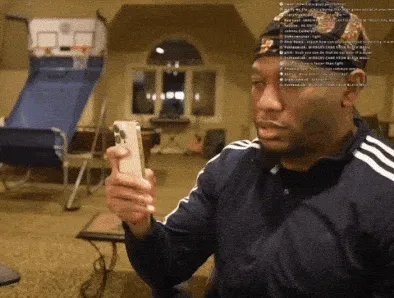
Video: Zias and BLou try to see if sound or light is faster 😂, embedded from its original platform.
What the meme is
The Sound vs.
Light Speed Test refers to a viral clip of streamers Zias and B.Lou attempting to settle the classic elementary physics question, what is faster, sound or light?, with the most unscientific method imaginable: turning on a phone flashlight at the exact same moment as yelling 'Ah' and having the other person judge which one 'won.' The humor comes from the dead-serious commitment to an experiment that proves nothing, since light is factually faster than sound and the test measures nothing but vibes.
B.Lou even concludes that sound is faster 'sometimes,' which is the exact kind of confident wrongness the internet lives for.
As a meme, the clip works as a reaction format for broken logic, pseudo-intellectual brainstorming, and DIY problem-solving that defies common sense. People use it whenever someone 'tests' something in the dumbest possible way, or when a group confidently talks through an idea that collapses under two seconds of actual thought.
The ironic framing is key: edits and captions treat Zias and B.Lou like genius researchers, 'too smart for this world,' 'the TRUE testers', which is the joke. Fans also call the duo the 'Hood Research Department,' a nickname for their whole series of funny pseudo-science experiments, and this clip is its flagship moment.
The format shows up mostly as video edits on TikTok and Instagram Reels, often set to slowed phonk or hype songs with dramatic captions like 'bro Proved that Sound Is actually faster than Light.' It can also be invoked in text, saying 'sound is faster than light' or referencing the test is shorthand for playful, willful stupidity, said with love.
It reads as affectionate mockery: nobody actually thinks the duo are scientists, and the duo are in on the bit as part of their Hood Research Department content. [1][2]
Seen in use
People using “Sound vs. Light Speed Test” in their own posts, each linked to the post itself. These are examples of use, not sources.
“”
“”
“”
“”
“”
Every quote above passed the same verification gate this site publishes under: real source, real date, copied verbatim. See the editorial policy.
How it spread
The clip first went viral on TikTok shortly after the March 2025 stream, with reposts pulling millions of views. But its biggest wave came in September 2026, when the clip experienced a full resurgence and became the subject of a new generation of edits on TikTok and Instagram Reels.
TikToker @bah7uz posted a meme based on the clip on September 14th, 2026 that gained over 3.7 million views in three days, and editors like @gigasethh and @yhorikedits followed with their own versions gaining hundreds of thousands of views within days.
The resurgence works because the clip is endlessly remixable: the setup (a simple trivia question), the bewilderment, and the absurd 'experiment' slot perfectly into the edit format where mundane moments get treated like cinematic genius.
The ironic 'great scientists' framing gives editors a clear bit to execute, dramatic music, glowing titles, captions calling them too smart for this world, and the Hood Research Department branding gives fans a whole universe of related clips to pull from.

Variants & examples
Casual and ironic, use it to lovingly clown bad logic or fake-deep 'experiments.' Fully in its peak edit era, so referencing it lands right now.
- “He tried to test if his mic was working by asking the chat if they could hear him, bro did the sound vs. light speed test.”Roasting a friend's broken logic in a group chat
- “Sound is faster than light, I tested it myself 😭”Ironic comment under a TikTok edit of the clip
- “Zias and B.Lou really run the Hood Research Department, peer review and everything.”Twitter/X reply joking about the duo's pseudo-science series
- “Me and my roommate doing the sound vs. light speed test at 3am instead of studying.”Caption on a TikTok recreating the experiment
- “That's a Hood Research Department level experiment right there.”Reacting to any hilariously unscientific DIY test
Frequently asked
What is the Sound vs. Light Speed Test meme?
It's a meme based on a viral clip of streamers Zias and B.Lou testing whether sound or light is faster by turning on a phone flashlight at the same time as yelling 'Ah' and judging which one wins. It's used to mock hilariously unscientific reasoning.
Who are Zias and B.Lou?
They're a YouTube reaction duo and streamers behind the ZIAS! channel. The clip comes from their 'Hood Research Department' series, where they test scientific theories in funny ways.
Is sound actually faster than light?
No, the speed of light is factually much faster than the speed of sound. The joke of the meme is that B.Lou claims sound is faster 'sometimes' based on their flashlight-and-yelling experiment.
What does 'Hood Research Department' mean?
It's the fan nickname for Zias and B.Lou's series of comedic pseudo-science experiments, of which the sound vs. light test is the most famous moment.
How do people use the meme?
Mostly as TikTok and Instagram Reels edits that ironically treat the duo as genius scientists, and as a reaction format for any situation involving broken logic or a DIY 'experiment' that defies common sense.